How to Choose a Hitch Bike Rack: Complete Buyer's Guide
Quick Answer: Choose based on bike capacity (1-2 bikes = platform, 3+ bikes = vertical), bike types (e-bikes need 60-80 lb capacity per bike), and usage frequency (weekly riders benefit from easy-load designs). Match the rack type to how you actually ride.
Choosing the right hitch bike rack means matching the design to how you actually use it. Hitch racks are the easiest and most secure way to transport your bike by car, offering more stability than trunk racks and avoiding the hassle of removing wheels or hoisting bikes onto roofs like roof-mounted systems.
The hitch-mounted bike rack market is experiencing robust growth, with the global market valued at $1.2 billion in 2024 and projected to reach $2.3 billion by 2033. This growth is driven by increased consumer interest in outdoor recreation, cycling tourism, and the rising popularity of e-bikes, which have necessitated stronger, more adaptable rack designs.
This complete guide walks you through the three main hitch bike rack types and gives you a proven framework for choosing the perfect rack for your needs.
How to Choose: Start With These 5 Questions
Before comparing rack types, answer these five questions to narrow your options:
-
How many bikes do you carry? (Consider 6-12 months from now, not just today)
-
What types of bikes do you own? (Road, mountain, e-bike, fat tire, carbon frame)
-
Do you need rear vehicle access? (Tailgate, hatch, or trunk access)
-
Where will you store the rack? (Garage space, wall mount, or stays on vehicle)
-
How often will you use it? (Occasional trips vs. weekly rides)
Your answers determine which rack type fits your lifestyle.
Types of Hitch Bike Racks: Understanding Your Choices
Platform Hitch Bike Racks

Platform racks carry bikes on individual trays, securing both wheels and frame at waist height. They offer more stability than hanging racks and don't require removing the front wheel.
Best for: 1-2 bikes, road bikes, lighter mountain bikes, riders who don’t mind lifting up their bike.
Pros:
-
Intuitive, straightforward loading
-
Minimal bike-to-bike contact
-
Bikes sit stable during transport
-
No frame contact reduces scratch risk
Cons:
-
Limited to 1-4 bikes maximum (most top only at 2)
-
Takes up significant space behind vehicle
-
Heavier per-bike weight capacity limits (typically 60 lbs per bike max)
Who should buy: Casual riders with 1-2 bikes who prioritize carrying bikes horizontally over capacity
Hanging Hitch Bike Racks

Hanging racks suspend bikes from the frame using support arms and straps. These racks typically accommodate bikes with wheel sizes 16 inches and up and are available in 2 to 5 bike capacities.
Best for: Budget-conscious riders, occasional use, lighter bikes only
Pros:
-
Most affordable option (often under $200-300)
-
Compact when folded
-
Lightweight design
-
Easy installation in minutes
Cons:
-
Direct frame contact creates scratch risk on expensive bikes
-
Not suitable for carbon bikes or e-bikes due to frame contact and weight limitations
-
More bike movement and sway during transport
-
Bikes spaced closely together, increasing interference
Who should buy: Riders on a tight budget who transport lighter bikes occasionally and accept the risk of frame contact
Vertical Hitch Bike Racks

Vertical racks carry bikes upright by the front wheel, stacking them in a space-efficient vertical design. The vertical hanging position keeps bikes stable and close to the back of your vehicle.
Best for: Families, mountain bikers, anyone carrying 3-7 bikes regularly
Pros:
-
Highest capacity in compact footprint (3-7 bikes possible)
-
Minimal to no frame contact (depending on brand) protects expensive components
-
Handles mixed bike types easily
-
Roll-in, roll-out loading requires no heavy lifting
-
More compact garage storage than platform racks
-
Can carry up to seven bikes at once, with vertical designs keeping them close to the vehicle
Cons:
-
Heavier overall rack weight
-
More expensive than cheaper tray racks and hanging racks
Who should buy: Families, riding groups, and anyone who needs to carry 3+ bikes regularly or wants future capacity growth
Your Buying Decision Framework: 5 Critical Questions Answered
1. How Many Bikes Do You Need to Carry—Now and Later?
This is your biggest decision factor. Don't just think about today—consider 6 to 12 months from now.
Decision guide:
-
1-2 bikes: Platform racks work well, but consider if you'll add bikes soon
-
3 bikes: Most style racks can accommodate 3 bikes (Platform, Hanging and Vertical)
-
4-7 bikes: Vertical racks like the VelociRAX 7 MAX become your only practical solution
Common mistake: Buying for today's needs and outgrowing your rack within a year. If you ride with family or friends, or if kids are getting into biking, plan for capacity growth now. Buying a 3-bike rack when you'll need 5 means buying twice.

Market insight: Over 62% of households with SUVs or trucks participate in cycling for recreation or health, and 38% of urban users are investing in racks specifically for fitness and commuting purposes. This trend is driving demand for higher-capacity, multi-bike solutions.
2. What Type of Bikes Are You Carrying?
Not all racks handle all bikes equally. Your bike types directly impact which racks will work.
Consider these factors:
-
Mountain bikes vs. road bikes: Different frame geometries and weights
-
Full-suspension frames: Often incompatible with hanging racks
-
Carbon frames: Never hang a carbon frame by the frame
-
E-bikes: Weight matters—modern e-bikes typically weigh 50-80 pounds
-
Fat tire bikes: Require tire trays that accommodate 4-5 inch wide tires
E-bike considerations: E-bikes have transformed rack requirements. Standard bike racks typically have weight limits of 35-40 pounds per bike, while e-bikes require racks rated for 60-80 pounds per bike. Always check both per-bike capacity and total rack capacity.
Decision guide:
-
Hanging racks struggle with modern full-suspension geometry and are too heavy for e-bikes
-
Platform racks typically max out at 60 lbs per bike
-
Vertical racks like the VelociRAX 5X MAX handle mixed bike types because they secure bikes by the wheel instead of the frame—eliminating contact with expensive components and accommodating various frame shapes
 Expert tip: Remove the battery before loading, which typically reduces weight by 8-12 pounds, protects sensitive electronics from road vibration, and makes loading significantly easier.
3. How Important Is Vehicle Access?
Some racks completely block your tailgate, swing doors, or rear hatch. This becomes critical on road trips.
Ask yourself:
-
Do you need to access rear cargo during trips?
-
Will the rack tilt or pivot out of the way easily?
-
Does your vehicle have a rear-mounted spare tire that interferes with the rack?
-
Do you have a large SUV tailgate or smaller sedan trunk?
Decision guide: Some racks advertise "tilt features," but not all tilt far enough to fully open larger SUV hatches. Look for racks with hydraulic dampers that make tilting smooth and controlled, allowing full back hatch access even with bikes loaded.
4. How Much Space Do You Have When the Rack Is Not in Use?
A bike rack doesn't disappear when it's off your vehicle. Storage is often overlooked but frustrating if you get it wrong.
Think about:
-
Garage ceiling height and floor space
-
Driveway clearance if storing on your vehicle
-
Whether the rack folds flat or hangs on a wall
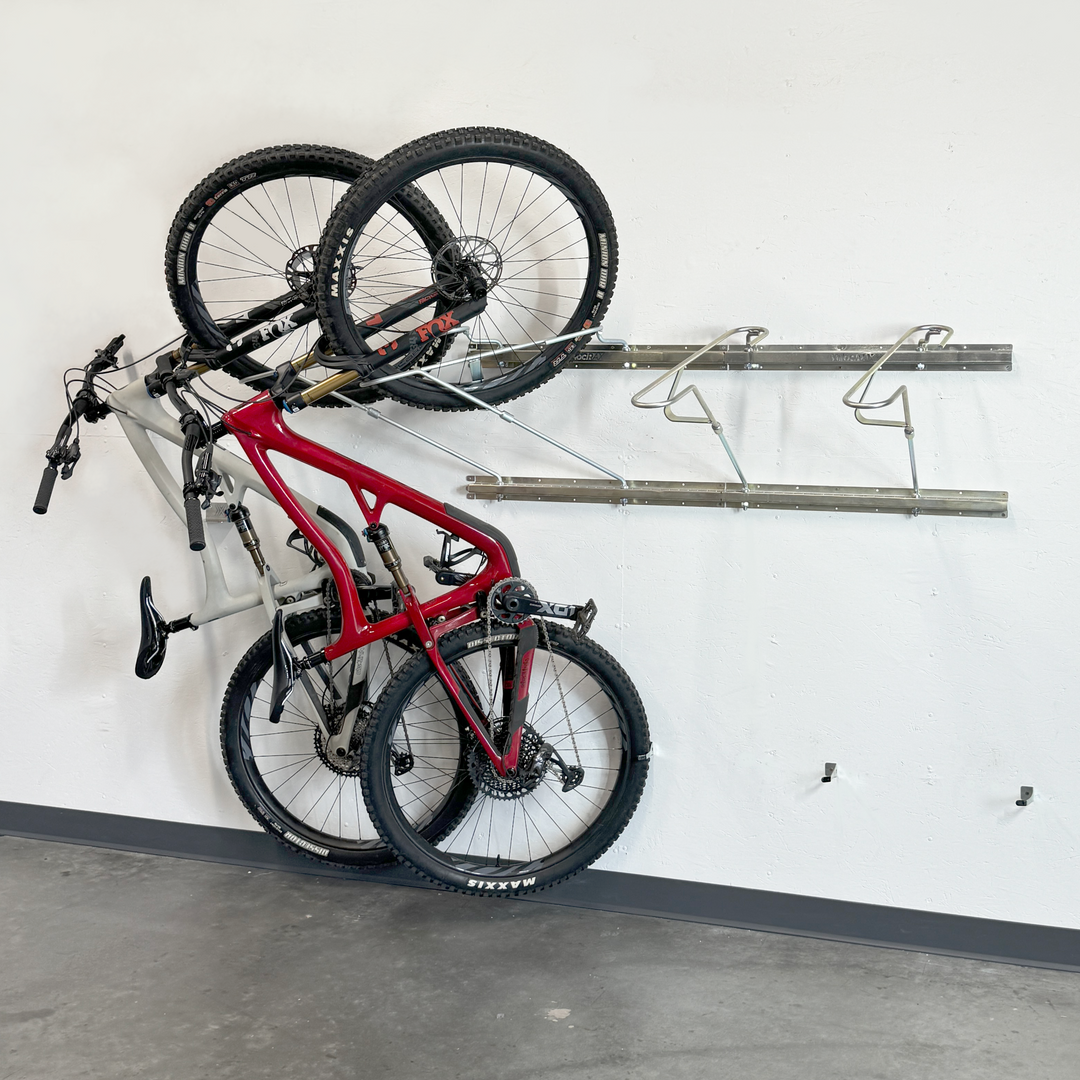
Decision guide: Vertical racks often store more compactly for the capacity they offer. Platform racks can take up significant garage floor space even when folded—a 2-bike platform rack folded can still extend 2-3 feet from the wall. VelociRAX includes a wall mount with each rack, letting you hang it upright in your garage to maximize floor space—or even use the rack as additional bike storage when not on your vehicle.

5. How Often Will You Use the Rack?
Usage frequency changes what features matter most to your daily experience.
Occasional trips (a few times per year):
-
Convenience and ease of use matter most
-
Price sensitivity is higher
-
Lighter weight may be preferable
Weekly riding (once or twice per week):
-
Durability and quick loading become critical
-
Time savings add up over the season
-
Slightly heavier racks with better features pay off
Frequent travel (multiple times per week):
-
Stability, security, and weather resistance are essential
-
Premium features justify the investment
-
Bike protection matters more
Decision guide: Expert testers drove hundreds—in some cases, thousands—of miles with bikes on racks to evaluate real-world durability and convenience. If you're loading bikes multiple times per week, a rack that's slightly heavier but easier to load—like a vertical rack with roll-in, roll-out access—saves time and frustration long term. A 30-second loading time vs. 2-minute loading time adds up to hours saved per season.
Hitch Bike Rack Comparison: At-a-Glance Decision Chart
|
Rack Type |
Bike Capacity |
Price Range |
Weight Limit |
Best For |
Main Limitation |
|
Platform |
1-2 bikes |
$$$ ($400-700) |
60 lbs/bike |
Casual riders, simple loading |
Limited capacity, large footprint |
|
Hanging |
2-4 bikes |
$ ($200-500) |
35-50 lbs/bike |
Budget buyers, light use |
Frame contact, incompatible with e-bikes |
|
Vertical |
3-7 bikes |
$$$ ($700-1,300) |
55-100 lbs/bike |
Families, MTB groups, e-bike owners |
Heavier rack, requires 2" hitch |
Understanding Hitch Classes and Requirements
Receiver tubes typically come in 2 sizes: 1¼-inch, 2-inch measured across the inside of the square opening. Most trucks and SUVs use a 2-inch receiver (however some heavy duty trucks have hitches that are 2.5 or 3 inches).
Hitch class requirements for bike transport:
-
Class I (1.25” receiver): Up to 2,000 lbs towing capacity, 200 lbs tongue weight—adequate for 1-2 lighter bikes
-
Class II (2” receiver): Up to 3,500 lbs towing capacity, 300-350 lbs tongue weight—recommended for e-bikes
-
Class III (2” receiver): 5,000+ lbs towing capacity, 500+ lbs tongue weight—recommended for e-bikes or carrying more than 3 bikes.
Important: Heavier-duty racks, especially those designed for e-bikes, often require the larger 2-inch receiver for added strength and stability.
Making Your Final Choice: Which Rack Should You Buy?
Use this decision tree to find your best match:
Choose a platform rack if:
-
You carry 1-2 bikes maximum
-
You have a larger vehicle and storage space isn't a concern
-
You rarely ride with groups
-
Your bikes are under 60 lbs each
-
If you don’t mind lifting the full weight of your bike about waist high
Choose a hanging rack if:
-
Budget is your #1 concern
-
You ride occasionally (less than once per month)
-
You only have lighter, traditional bikes (no e-bikes or full-suspension)
-
You accept the risk of frame contact and understand hanging racks should never be used with carbon bikes
Choose a vertical rack if:
-
You need capacity for 3+ bikes
-
You ride with family or friends regularly
-
You have mixed bike types (road, MTB, e-bikes)
-
You want compact storage in your garage
-
You value no-lift loading (kids and adults can load easily)
-
You want to protect expensive bike frames from contact damage
-
You're planning for future bike additions
Frequently Asked Questions About Choosing a Hitch Bike Rack
What's the best hitch bike rack for beginners?
For beginners, prioritize ease of use and versatility. A vertical rack like the VelociRAX 3X MAX offers simple roll-in loading, room to grow (up to 3 bikes), and protects bikes by avoiding frame contact. If you're certain you'll only ever carry 1-2 bikes, a platform rack is a good alternative.
How much should I spend on a hitch bike rack?
Budget $200-500 for quality hanging racks, $400-700 for platform racks (1-2 bikes), and $700-1,200 for vertical racks (3-7 bikes). At $1,000, premium platform racks are priced at the higher end of the market. While vertical racks cost more upfront, they offer better long-term value if you need capacity or versatility. Cheap racks under $200 often fail within 1-2 seasons.
What hitch class do I need for a bike rack?
Most trucks and SUVs use a 2-inch receiver, and many racks are available in both 1.25-inch and 2-inch sizes, but heavier-duty racks often require the larger 2-inch receiver. For e-bikes specifically, a Class III hitch with a 2-inch receiver is the recommended minimum for safe transport because you need adequate tongue weight capacity—typically 350-500 lbs for multi-bike e-bike configurations.
Are vertical hitch bike racks safe for road bikes?
Yes, when properly spaced. Vertical racks secure bikes by the wheels, not the frame, which actually protects delicate road bike frames better than clamping designs. The VelociRAX 5X MAX offers 15 inches between tire baskets which is ideal spacing for multiple road bikes right next to each other.
Can hitch bike racks carry e-bikes safely?
Yes, but weight limits are critical. Heavy-duty e-bike hitch racks typically handle 120-160 lbs total capacity, with individual bike limits ranging from 60-80 lbs per bike. Always check both per-bike capacity and total rack capacity. Many platform racks max out at 60 lbs per bike. The VelociRAX 412 MAX handles e-bikes with robust capacity, making it ideal for multiple e-bikes.
Pro tip: It's recommended to remove the battery during transport, which reduces weight by 8-12 lbs, protects the battery from road vibration and weather, and makes loading easier.
Do hitch bike racks damage bikes?
Quality racks that minimize frame contact reduce damage risk significantly. Racks that secure bikes by the wheels, keeping the frame untouched, eliminate the risk of scratches and wear on expensive components. Avoid cheap hanging racks with metal-to-frame contact points that can damage carbon frames or high-end paintwork.
Can I use a regular bike rack for e-bikes?
Standard bike racks are simply not built for the forces and weight of a 60 to 80-pound e-bike, making them an unsafe choice for transport. Regular racks typically have weight limits of 35-40 pounds per bike, while e-bikes require specialized racks rated for 60-80 pounds per bike minimum.
How do I prevent my hitch bike rack from being stolen?
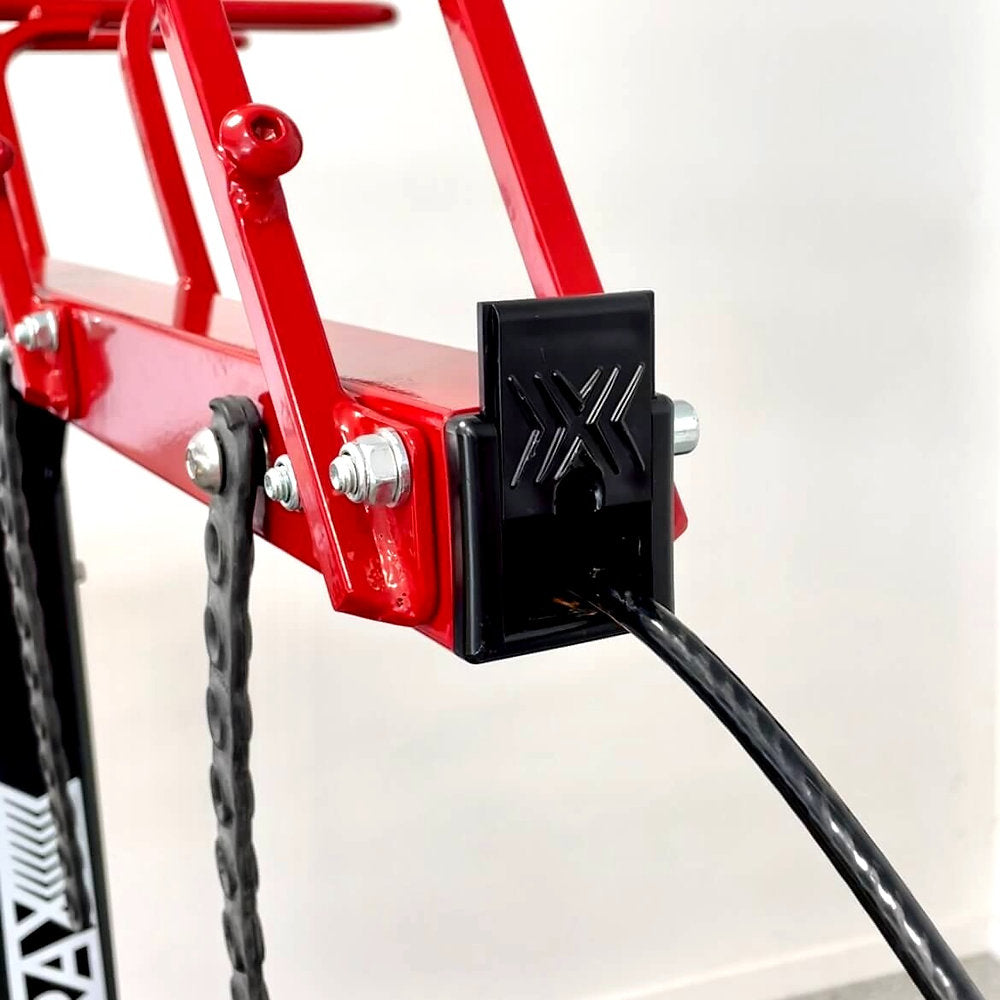
Use a locking hitch pin to secure the rack to your vehicle and cable locks to secure bikes to the rack. The VelociRAX Integrated Locking System includes 2 hidden cables in the top crossbar and pad lock. Park in well-lit, visible areas when possible. Look for racks that come with hitch pin locks and integrated cable locks for rack and bike security.
Can I install a hitch bike rack myself?
Yes—most hitch bike racks install in under 5 minutes without tools. The rack slides into your vehicle's hitch receiver and locks in place with a hitch pin. Some vehicles need professional hitch installation first if they don't have a receiver already.
What about tongue weight capacity?
Most transportation experts recommend a minimum tongue weight capacity of 350–500 pounds for safe e-bike operation, particularly when using multi-bike configurations. This capacity requirement accounts for the combined weight of the rack system, multiple bikes, and dynamic forces during highway travel. Check your vehicle's owner's manual for your specific tongue weight rating.
Best VelociRAX Hitch Bike Racks by Use Case
Bikerumor recently updated their hitch bike rack buyer's guide with the addition of the VelociRAX 412 MAX as their pick for the best vertical hitch rack, calling it "easily the best vertical rack that I've used" and praising its 100-pound per-bike capacity, user-friendliness, and stability.
Best Overall: VelociRAX 6 MAX
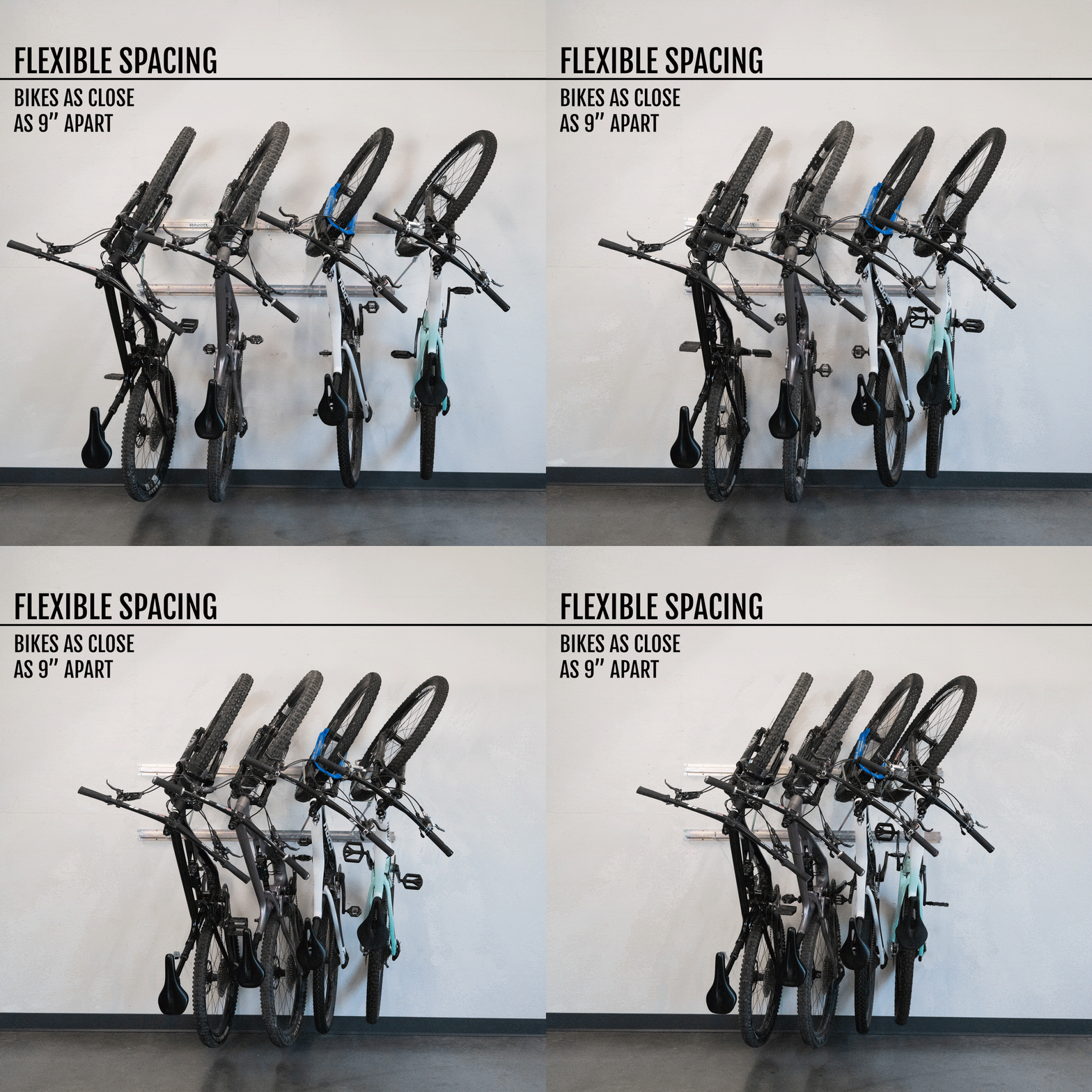
Carries up to 6 bikes with 10-inch spacing, hydraulic dampers for smooth tilting, and easy roll-in loading. The sweet spot for families and riding groups who need capacity without compromise.
Best for Families: VelociRAX 7 MAX
Industry-leading 7-bike capacity means no one gets left behind. Perfect for large families or group rides where you need maximum capacity.
Best for Carrying Mixed Bikes: VelociRAX 5X MAX
Robust weight capacity with 15-inch spacing between baskets handles heavy e-bikes, fat tire bikes, road/gravel bikes, and kids bikes with ease. Roll-in loading eliminates the need to lift heavy bikes.
Best for e-Bikes: VelociRAX 412 MAX
Luxurious 12-inch spacing prevents handlebar overlap—ideal for heavy e-bikes and full-suspension mountain bikes that need a little extra breathing room. Features 100 lb per-bike capacity.
Most Affordable: VelociRAX 3X MAX
Compact 3-bike rack with 15-inch spacing and all the features of larger models at an entry-level price. Perfect for small families or couples.
Ready to Choose Your Hitch Bike Rack?
The right hitch bike rack matches how you actually ride—not just today, but over the next few years. Expert testers emphasize that bikes should be entrusted to racks that have proven dependable over thousands of miles of real-world use.
Start by answering the five questions in this guide, then compare rack types based on your specific needs.
Next steps:
-
Browse all VelociRAX hitch bike racks to compare models
-
Check your vehicle's hitch class and tongue weight capacity
-
Consider future needs—it's easier to buy the right capacity now than upgrade later
For riders who value capacity, convenience, and long-term durability, vertical hitch bike racks offer the best combination of features in the most space-efficient design.
Questions? Contact our team for personalized guidance on choosing the right rack for your vehicle and riding style.